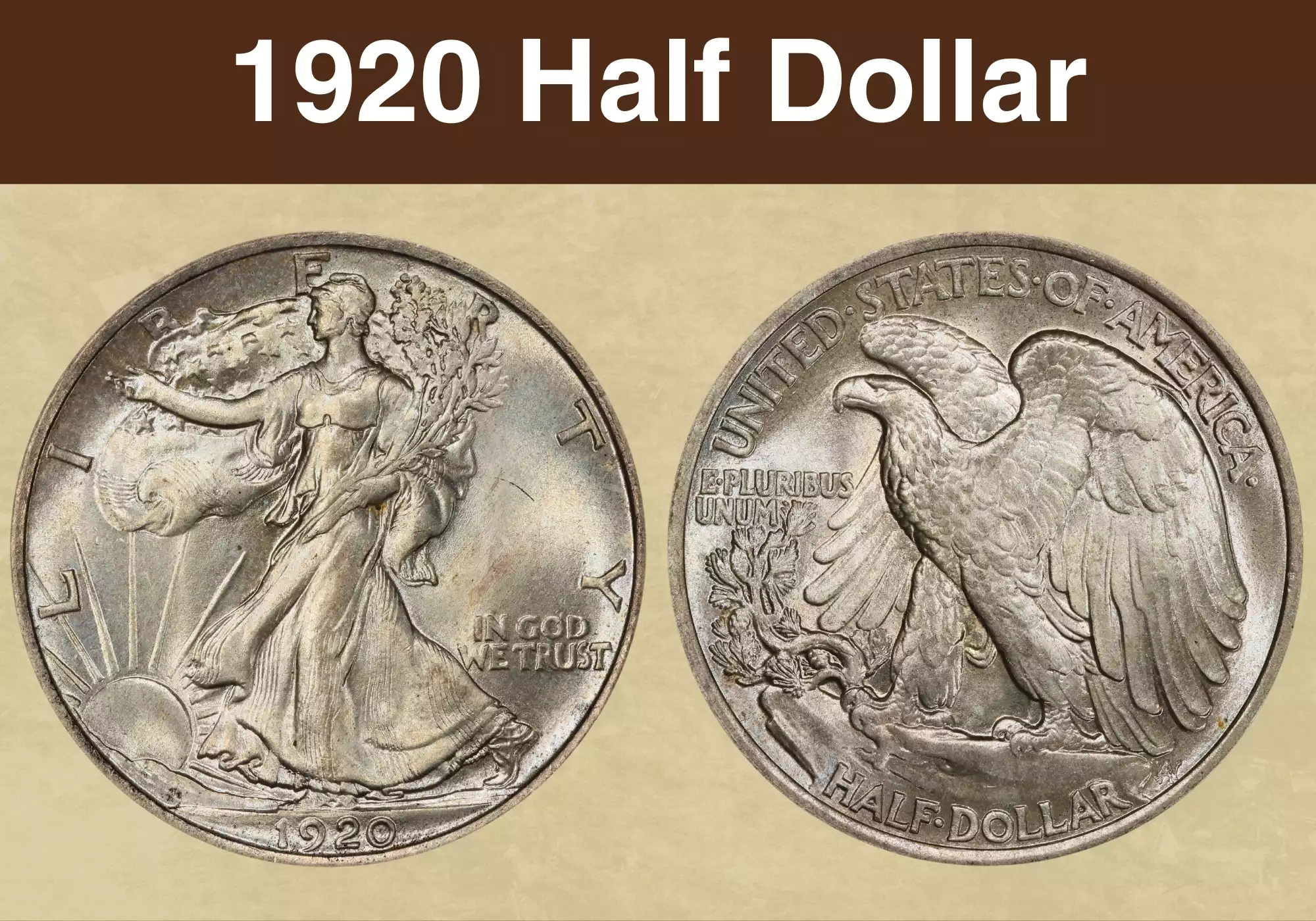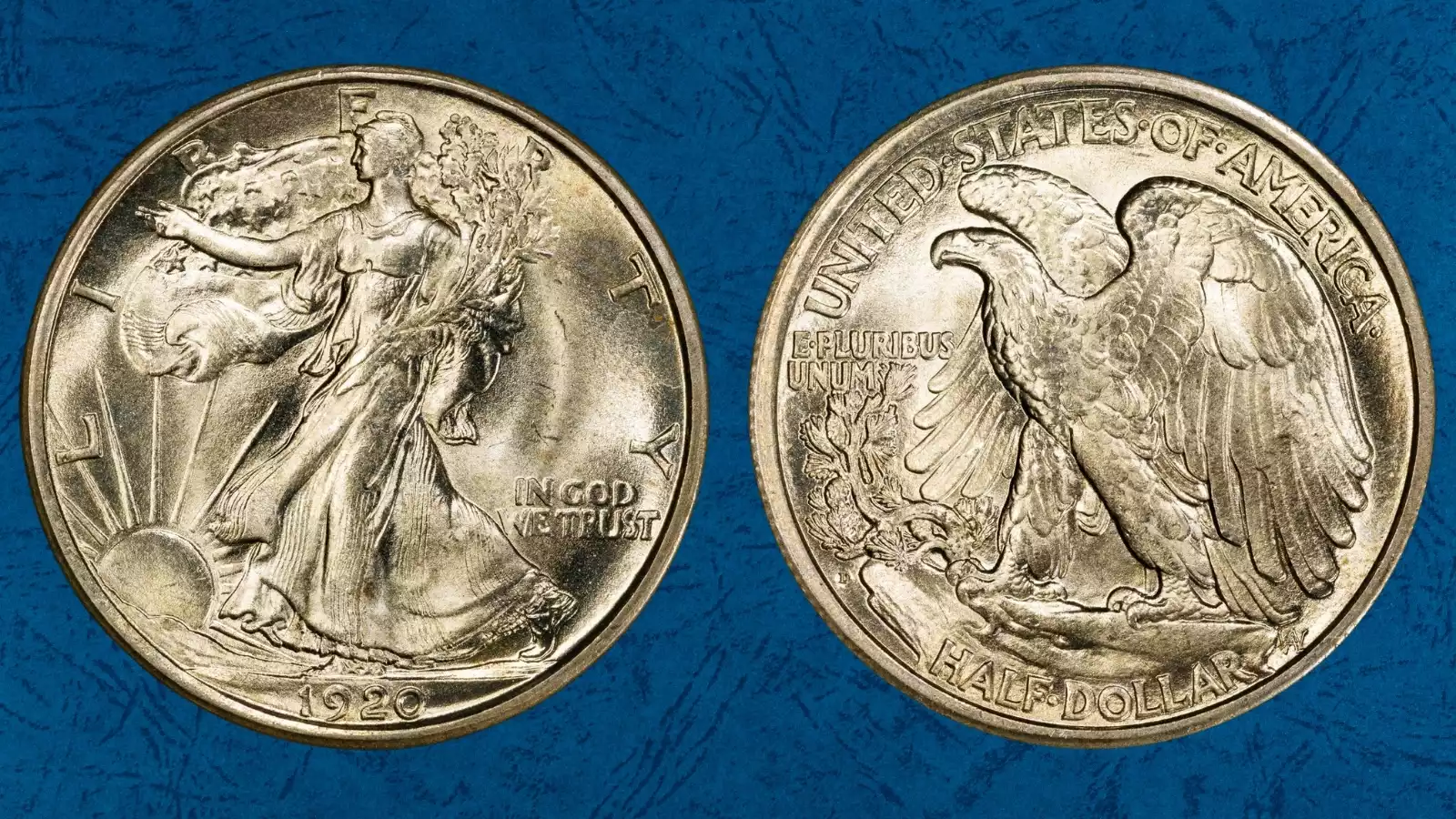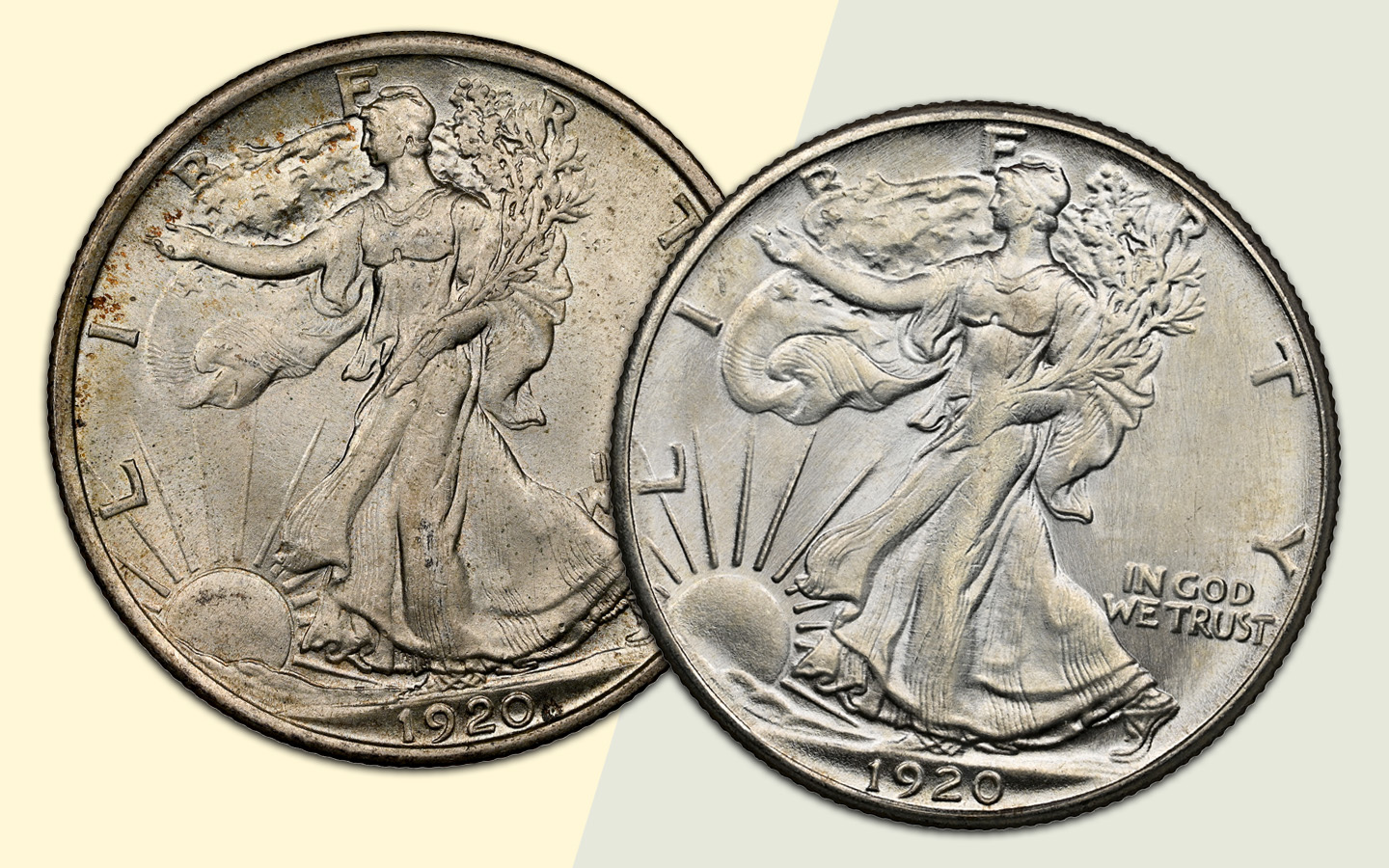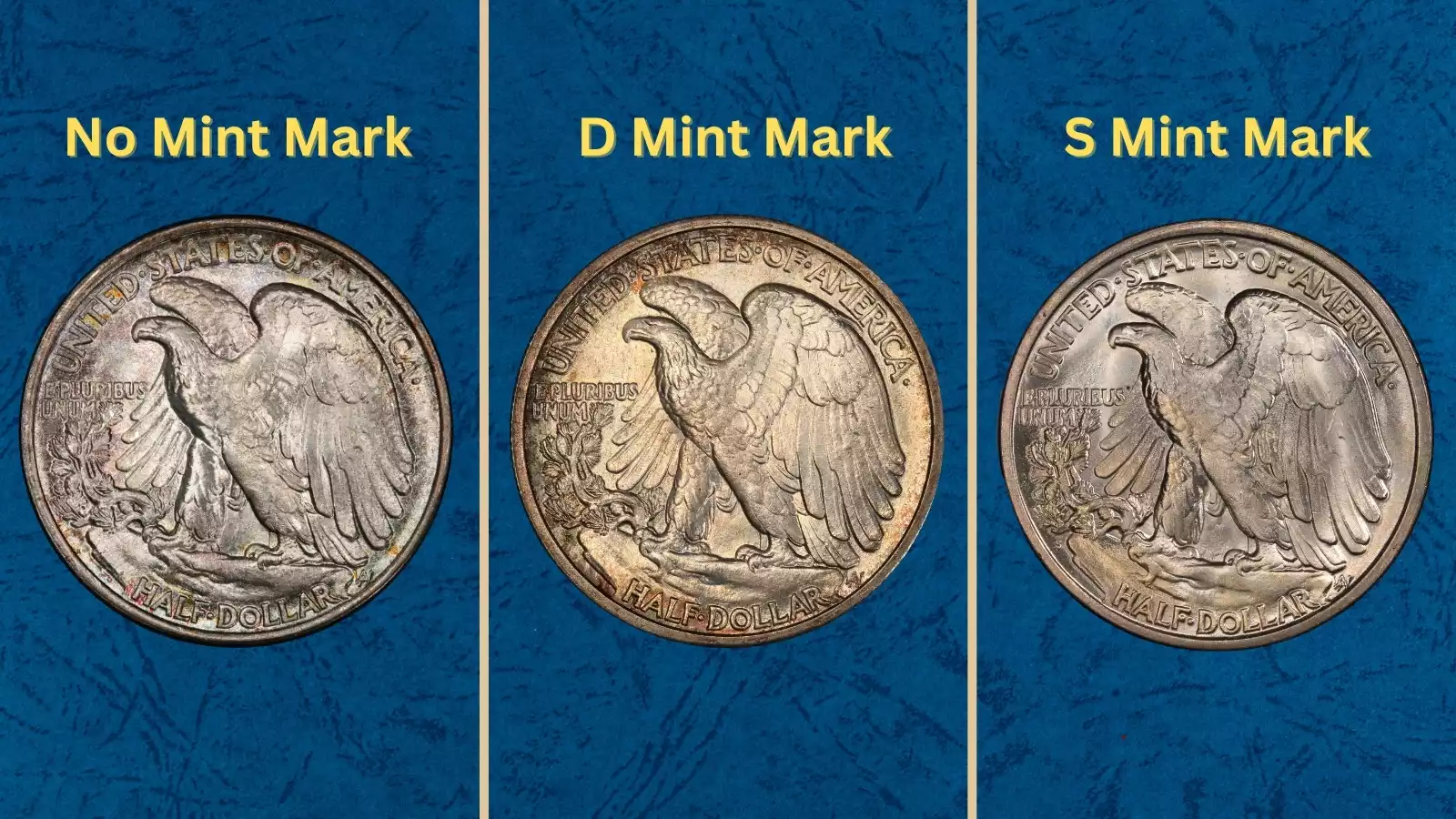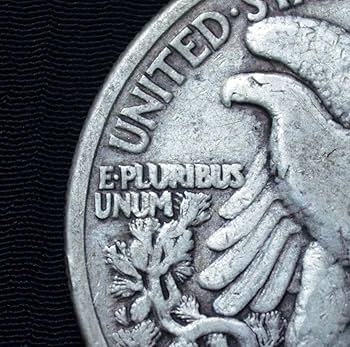
Doubled die errors are produced during the hubbing process at the mint when the working die receives multiple impressions from the master hub at slightly different angles or positions. The resulting coin shows distinct doubling — a second ghost-like image offset from the primary design. On Walking Liberty half dollars, the most visually striking doubled dies appear on the date, the inscription LIBERTY, or IN GOD WE TRUST on the obverse, and on the eagle's wings or E PLURIBUS UNUM on the reverse.
To identify a DDO on a 1920 half dollar, examine the four date digits under a 5×–10× loupe. Genuine hub doubling shows two distinct, separated impressions of the numerals with clean edges on both — not the smeared, shelf-like appearance of mechanical doubling caused by a worn die. DDR varieties are most striking when the doubling appears on the eagle's left wing feathers or on specific letters in E PLURIBUS UNUM, visible as clearly split letterforms.
The rarity premium on any confirmed doubled die variety for the 1920 date is exceptional. Given the coin's already scarce mintages across all three mints — particularly the 1920-D — a certified DDO or DDR on this date represents a double rarity: an error variety on a key date. The most celebrated Walking Liberty DDR, the 1946 DDR FS-801, achieved $9,400 at Heritage Auctions in MS66+; a DDO on the scarcer 1920 issue would substantially exceed that benchmark. Any example should be submitted to PCGS or NGC for authentication and attribution before offering for sale.
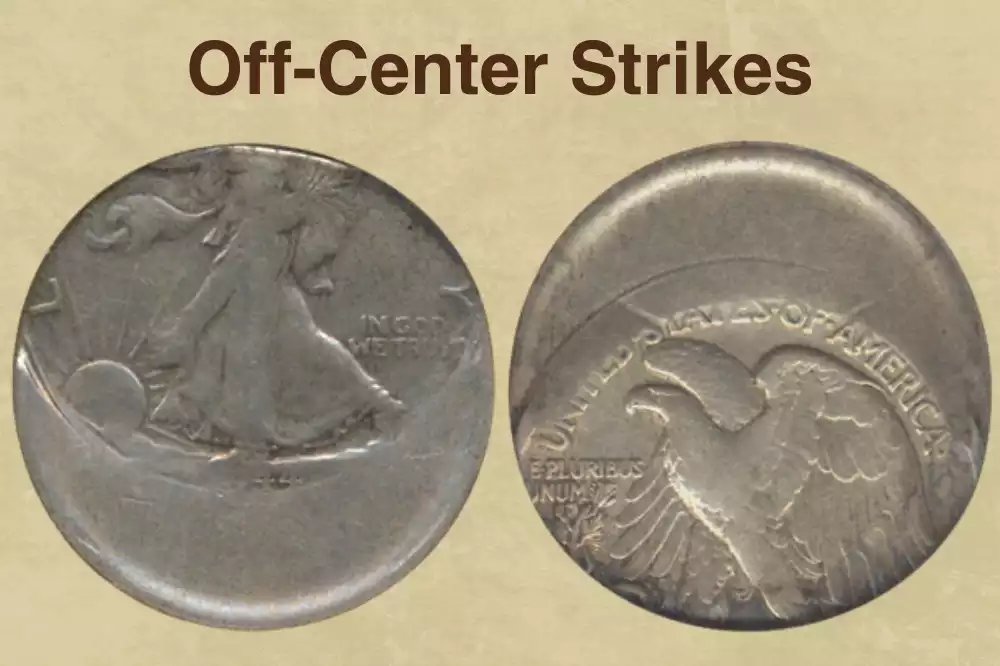
Off-center strikes occur when a coin planchet — the blank silver disc — is incorrectly fed into the coining press and sits off-center between the upper and lower dies at the moment of striking. The result is a coin where Liberty's striding figure, the date, and surrounding inscriptions are compressed into one portion of the coin while the opposite side shows a dramatic arc of unstruck blank metal. The severity of the offset is expressed as a percentage: a 5% off-center coin shows slight misalignment, while a 50% example is half blank.
For 1920 Walking Liberty halves, the most desirable off-center examples are those where the date is still fully legible despite the shift. Collectors prize legible-date off-centers because the date attribution confirms the coin's identity and year — critical for market value. Examples where the design is shifted laterally (toward Liberty's head or feet) tend to be more visually dramatic than vertical offsets. A 10× loupe can confirm that the struck design elements show the same detail quality expected for the coin's condition.
Off-center Walking Liberty halves command substantial premiums above base value. The most dramatic example in series history — a 1945-S double-struck specimen 55% off-center — realized $41,125 at Heritage Auctions in MS63. A 1920-dated off-center example, particularly on the key-date 1920-D, would be extraordinary given the combination of series error rarity and low mintage. Even minor 10–15% off-center examples on the 1920 date would realistically sell for several times a normal specimen of equivalent grade.
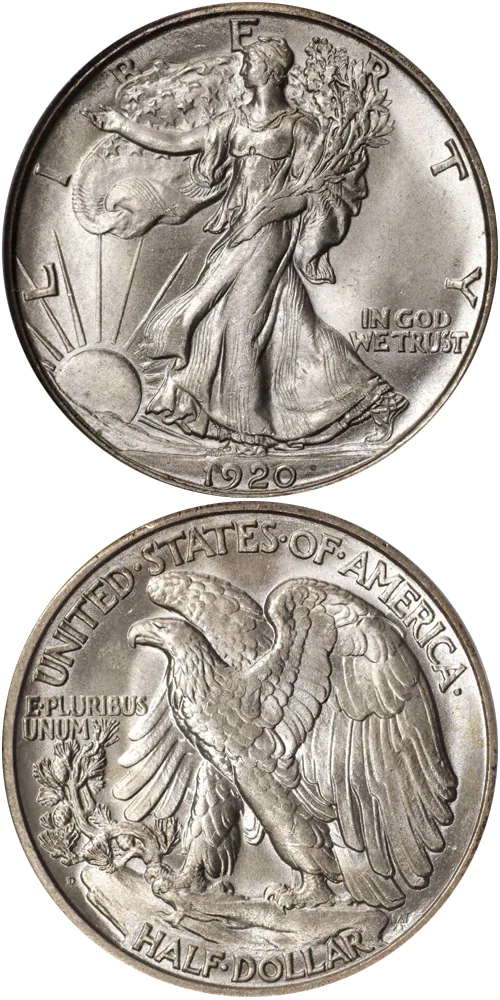
The Walking Liberty design by Adolph A. Weinman is one of the most artistically complex in American coinage history — and that complexity created chronic striking problems throughout the series. On the 1920-D specifically, the deepest detail in the dies concentrated at Liberty's left hand where she holds an olive branch and three arrows. Inadequate metal flow into this area during striking left the vast majority of 1920-D examples with a flat, featureless left hand — an endemic weakness that even affected many otherwise gem-quality specimens.
To assess your coin's strike quality, examine Liberty's left hand under a 10× loupe in raking light. A weakly struck example shows the hand as an indistinct blob or flat relief with no discernible finger or branch detail. A fully struck specimen shows individual fingers, the olive branch stem, and the separation between the branch and the arrows. PCGS numismatists have estimated that fewer than 30 pieces across all known 1920-D mint state examples meet what collectors consider a "full strike" standard — making this effectively a separate, ultra-rare tier within the date.
The market reflects this scarcity powerfully. Standard MS65 examples of the 1920-D already command $46,000 or more; a fully struck example at the same grade would realistically command a 50–75% premium based on comparable Walking Liberty issues where full-strike pieces have traded. The 1920-D's already low mintage of 1,551,000 combined with the near-impossibility of finding a full-strike survivor creates one of the series' most compelling condition rarities — one that sophisticated registry set collectors specifically target.
Clipped planchet errors occur during the blanking stage of coin production, before individual planchets are fed into the coining press. When the automated punch that cuts circular blanks from a strip of silver alloy overlaps with a previously punched area, or when the metal strip shifts improperly, the resulting blank has a curved crescent of metal missing from its edge. This crescent shape follows the arc of the blanking punch, giving it the characteristic curved profile that distinguishes it from a post-mint damage cut or nick.
On 1920 Walking Liberty half dollars, a clipped planchet shows as a smooth, curved bite taken out of the coin's edge, typically ranging from 5% to 20% of the coin's diameter. Straight clips (from strip edge overlaps) are also known. The key diagnostic for a genuine clip — rather than post-mint damage — is the Blakesley effect: a weakness in the design directly opposite the clipped area on the rim, caused by insufficient metal flow during striking. Under a loupe, check the rim at 180° from the clip for this characteristic flatness.
Clipped planchet errors on the 1920 dates hold particular appeal because they combine the collector interest in error coinage with the numismatic premium of an early Walking Liberty issue. Curved clips of 10–15% on a 1920-D would be especially desirable — the error rarity stacked atop the key date's inherent scarcity creates an appealing and relatively affordable entry point into dramatic errors. A well-preserved example with a large, clean curved clip and the Blakesley effect confirmed could realistically achieve $1,000–$2,500 at a major auction house.